
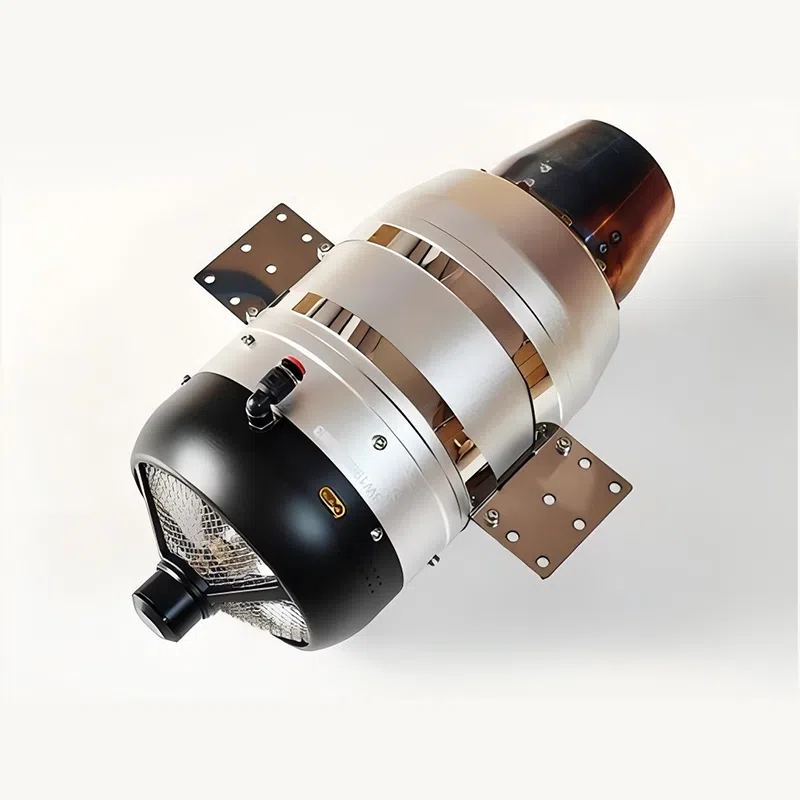
Product Overview
LT500 ultra-high-thrust micro turbojet engine is a heavy-duty civil propulsion system independently developed for large industrial unmanned aircraft, oversize fixed-wing drones and giant professional aeromodelling platforms, serving as premium high-power UAV engine and drone gasoline engine alternative for heavy civil flight equipment.
Our manufacturer specializes in independent R&D and mass production of miniature turbojet power units and gasoline-electric hybrid propulsion systems. We focus on delivering eco-friendly, energy-saving, intelligent, high-efficiency and cost-effective power solutions for global commercial UAV manufacturers, professional aeromodelling brands and university civil aerospace laboratories.
Compared with medium-thrust models like LT20 and LT400, LT500 delivers steady 500N peak thrust to match large airframes carrying heavy survey, crop-spraying and environmental monitoring payloads. It breaks the single-fuel limitation of most traditional UAV gasoline engine, supporting multi-fuel supply to adapt diverse fuel resource conditions across global operation regions. All heat-bearing core components are forged with aerospace-grade high-temperature alloy materials, passing thousands of hours of continuous aging, vibration and temperature cycling tests to guarantee stable all-day operation for industrial UAV fleets.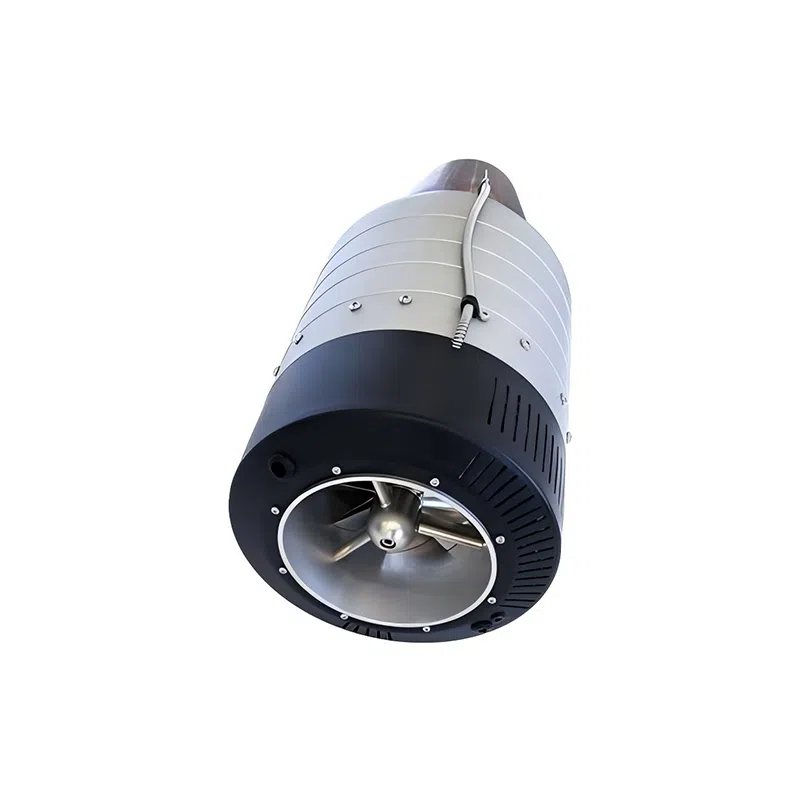
Complete Official Technical Parameter Table
| Parameter Category | Standard Specification Data |
|---|---|
| Official Model | LT500 Micro Turbojet Engine |
| Rated Maximum Continuous Thrust | 500N (50kgf) |
| Net Dry Weight | 4958g |
| Outer Diameter | 162mm |
| Overall Body Length | 420mm |
| Maximum Safe Limit Rotational Speed | 86,000 RPM |
| Stable Operating Idle Speed | 32,000 RPM |
| Peak Fuel Consumption Rate | 1300 grams per minute |
| Maximum Tolerable Exhaust Temperature | 750℃ |
| Ignition Control Mode | Full-Automatic Electronic Fuel Ignition |
| Compatible Fuel Types | Aviation Kerosene, Diesel, Regular Gasoline, Universal Industrial Gas Fuels |
In-Depth Performance Feature Breakdown
Stable High-Thrust Output & Linear Throttle Response
Equipped with optimized compression and combustion flow channel design, this UAV engine maintains steady 500N thrust under full-load operation. Its linear low-RPM thrust output solves insufficient takeoff power defects of ordinary drone gasoline engine, perfectly supporting heavy-payload UAV rapid ascent and long-distance cruise tasks including large-area aerial mapping, wide-range agricultural plant protection and cross-region environmental patrol.
Leak-Proof Sealing & Low-Consumption Lubrication System
The proprietary multi-layer sealing structure completely eliminates oil dripping issues at low startup RPM. Matched exclusive lubrication formula slashes engine oil usage, lowering long-term operation costs for commercial UAV operators and avoiding extra maintenance triggered by oil leakage pollution to internal components.
Superior Environmental Adaptability & Anti-Damage Performance
Reinforced anti-vibration mounting structure with salt-spray and overload resistance allows stable operation in humid coastal zones, high-temperature open farmlands and frigid mountainous areas. Strong signal anti-interference design ensures uninterrupted communication between UAV flight controller and this turbine power unit.
Extended Service Life via Exclusive Cooling & Balancing Tech
Self-developed active cooling system reduces rotor and bearing operating temperature; ultra-precise rotor dynamic balancing craft cuts internal vibration loss. Combined technologies greatly prolong the continuous flight service cycle of this UAV gasoline engine and lower spare part replacement frequency.
High Consistency & Convenient Daily Maintenance
Standardized mass production ensures identical performance of each engine unit, avoiding inconsistent thrust output across multi-drone operation fleets. Modular split layout enables operators to disassemble, inspect and replace fuel nozzles, ignition electrodes and filter elements without dedicated professional tools, simplifying routine maintenance workflows.
Civil Commercial Application Scenarios
Oversized High-Performance RC Jet Aeromodelling
Top-tier power option for large-scale jet model enthusiasts and professional aeromodelling competitions. The powerful low-speed thrust and sensitive throttle response of this UAV engine support complex high-maneuver flight movements, delivering authentic strong jet flight experience for oversize civil model aircraft.
Heavy-Load Civil Industrial UAVs
Functions as core drone gasoline engine power source for multiple large unmanned aerial platforms:
Large-area landform survey & remote sensing mapping UAVs equipped with heavy camera payloads
Wide-range agricultural plant protection drones for massive farm crop spraying operations
Long-distance river basin, forest and coastal environmental monitoring fixed-wing UAVs
Civil sightseeing & light cargo transport unmanned aircraft with high takeoff weight
University Civil Aerospace Laboratory Research
Ideal test power equipment for aviation teaching experiments and civil aircraft prototype R&D. Its multi-fuel compatibility, stable ultra-high-thrust output and complete real-time temperature & rotation speed data monitoring system provide reliable repeatable test data for miniature jet propulsion research projects.
FAQ Section
What fuel varieties can this LT500 UAV gasoline engine work with?
A1: LT500 features broad multi-fuel compatibility, supporting standard aviation kerosene, common diesel, regular gasoline and universal industrial gas fuels. Operators can select the most easily accessible fuel locally without relying on single special aviation fuel supplies.
Do I need professional aviation maintenance expertise to operate this high-thrust turbojet engine?
A2: No professional technical background is mandatory for daily operation. The full-automatic ignition and electronic throttle control system simplifies all operation steps. A detailed English operation manual and tutorial video will be delivered with every order; daily routine maintenance only requires simple visual inspection of fuel pipelines, sealing joints and exhaust nozzles.


