
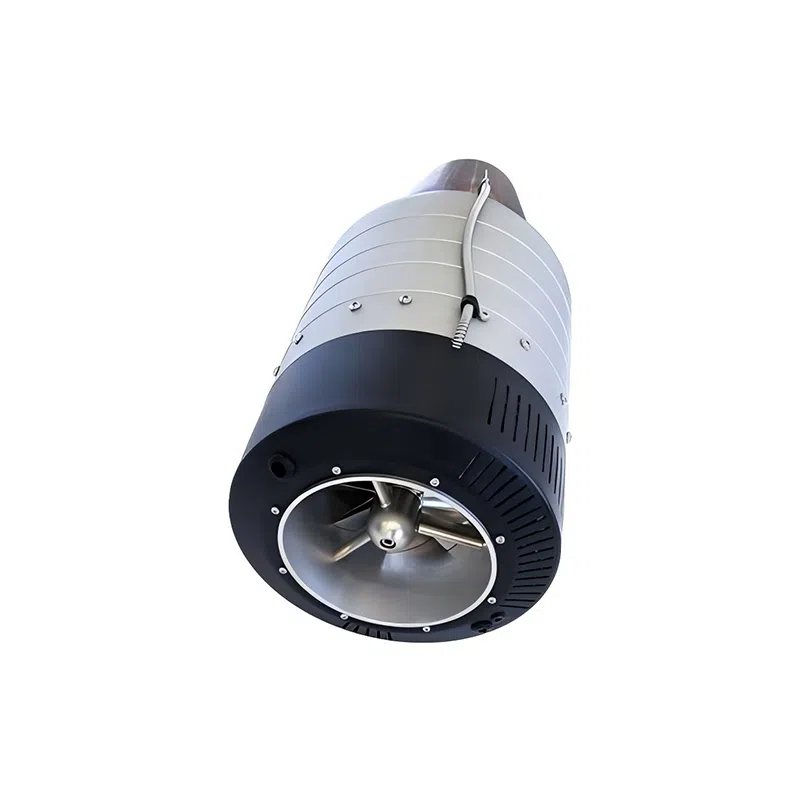
SW300Pro‑K Compact Micro Turbojet Engine


  1. Compact‑Size 30‑KG Stable Thrust Output

    The SW300Pro‑K mini turbojet engine delivers steady 30‑kilogram thrust. Its lightweight and compact design makes it well‑suited for medium‑sized civilian aeromodels, light‑duty inspection drones and small‑scale experimental flying platforms, maintaining smooth power output during long‑time continuous operation.

  2. Light‑Weight Space‑Saving Body Structure

    Boasting 132 mm outer diameter, 331.4 mm overall length and a net weight of only 2560g, this streamlined‑structure engine saves plenty of installation space. The durable metal housing effectively cuts high‑speed vibration and adapts to various complex flight airflow environments.

  3. Wide‑Range Adjustable Rotational‑Speed Performance

    The working‑speed scope ranges from 38000 rpm to 98000 rpm, with idle speed fixed at 38000 rpm. Custom‑tunable acceleration and deceleration curves allow users to adjust throttle response, meeting the power demands of take‑off, low‑speed cruise and fast‑speed flight for multiple medium‑size civilian aircraft devices.

  4. Fast‑Response Electric‑Starting System

    It features a maximum startup time within 30 seconds. Rich adjustable startup‑system parameters cover oil‑pump voltage, pre‑heating rotation speed and clutch separation speed. The reliable starter‑motor assembly brings quick and stable ignition and lowers the difficulty of ground‑based equipment debugging.

  5. Convenient Maintenance‑Friendly Structure

    Aviation kerosene serves as its special fuel. Operators need to mix 3%‑5% lubricating oil into fuel to build a protective oil film for internal rotating assemblies. The standard 25‑hour maintenance cycle reduces routine maintenance burden and daily operating expense.

SW300Pro‑K is a lightweight small‑sized kerosene‑driven micro turbojet engine designed exclusively for non‑military civilian flying equipment. Adopting a compact integrated layout, the engine optimizes the internal rotor and fuel supply system to achieve quick startup and outstanding high‑speed‑rotation stability.

All ignition parameters, throttle response and fuel‑pump limit voltage can be manually adjusted. This power unit fits medium‑size hobby aircraft models, light‑payload aerial‑survey unmanned aircraft, short‑range civilian patrol drones and small‑scale flight‑test equipment. All design purposes focus on aeromodel hobbies and civilian commercial aerial‑operation assignments.

Specification ItemDetailed Parameter
Continuous Rated Thrust30 kg
Outer Shell Diameter132 mm
Whole‑Machine Length331.4 mm
Net Weight2560 g
Idle Operating Rotation Speed38000 rpm
Peak Working Rotation Speed98000 rpm
Standard Rated Exhaust Temperature750℃
Maximum Safe Operating Temperature≤ 1000℃
Permitted Peak Fuel Consumption≤820 g per minute
Compatible FuelAviation kerosene
Lubricant Mix‑in Percentage3%‑5%
Fixed Routine Maintenance Interval25 working hours
Maximum Allowable Startup Duration≤30 s
Minimum Rated Input Voltage≥10 V

The turbojet main body and matched control accessories are separately wrapped with thick shock‑absorbing foam padding. Precision electronic components are packed with anti‑static bags for protection against static damage during long‑distance land and sea transportation.

Heavy‑duty thickened corrugated cartons are used for outer‑layer packaging for collision‑resistance. A complete printed operation manual comes with every parcel. Custom‑tailored packaging schemes are supported for bulk‑order buyers.


Q1: What civilian flying devices work well with the SW300Pro‑K micro turbojet

A1: This lightweight 30‑kg‑thrust power plant suits medium‑sized recreational aeromodels, light‑load aerial‑survey drones, short‑range civilian patrol unmanned machines and small‑size experimental flight gear. It is built purely for civilian‑oriented recreation and commercial aerial‑related jobs.

Q2: What steps help extend the service life of this kerosene turbojet

A2: Use qualified aviation kerosene blended with 3%‑5% lubricant oil. Inspect fuel‑pipe sealing status before every startup, keep exhaust temperature under the safe threshold, and carry out routine maintenance once the engine accumulates 25 working hours.

Q3: Am I allowed to adjust the ignition and throttle‑response parameters

A3: You can customize oil‑pump voltage, pre‑heating speed, acceleration curve and other operating settings. Always complete ground low‑speed debugging before formal flight testing.

Online Consultation

Please fill out the form below and we will contact you as soon as possible