
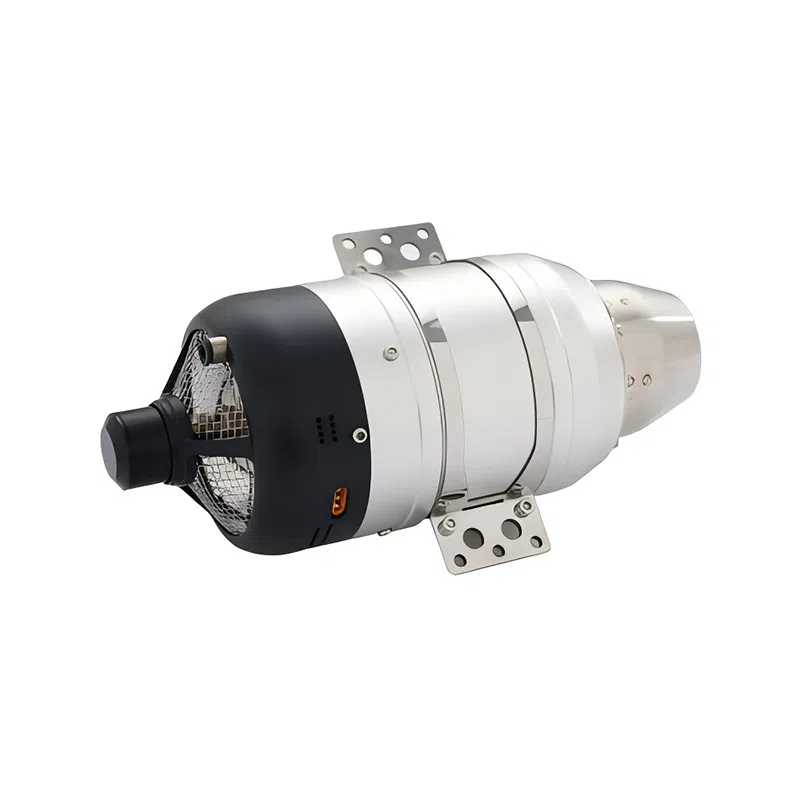
SW800Pro‑Y Upgraded‑Version Micro Turbojet Engine


  1. Stable 80‑KG Rated Thrust for Heavy‑Load Civilian Flying Equipment

    The SW800Pro‑Y improved turbojet engine supplies steady‑output 80‑kilogram thrust. It works perfectly for large‑scale hobby aircraft, heavy‑payload inspection drones and long‑distance civilian flying platforms, delivering reliable power during extended‑time continuous operation.

  2. Optimized‑Weight Reinforced Main‑Body Construction

    With 207.2 mm outer diameter and 454.7 mm overall length, this upgraded model adopts optimized internal components, bringing a net weight of 9500g. The strengthened metal casing cuts vibration under high‑speed rotation and adapts well to complicated airflow environments during flight.

  3. Broad Adjustable‑Speed Range and Flexible Throttle Tuning

    Its operational speed range spans 25000 rpm to 65000 rpm. The idle‑speed setting stays at 25000 rpm. Customizable acceleration and deceleration curves allow operators to adjust power response to satisfy take‑off, cruising and high‑speed flight demands of different large‑size civilian aircraft.

  4. Fine‑Tunable Startup‑System Parameters for Convenient Debugging

    Every startup‑related setting including oil pump voltage, pre‑heating speed and clutch separation speed can be adjusted. The mature electric‑start‑motor structure guarantees smooth ignition, which lowers the difficulty of ground commissioning for hobby users and commercial equipment operators.

  5. Simple Maintenance Cycle and Long Service‑Life Design

    This turbojet uses kerosene as its primary fuel. Users are required to mix 3%‑5% lubricating oil into fuel to form a protective oil‑layer for rotating parts. The standard 25‑hour maintenance cycle helps reduce routine‑upkeep workload and long‑term operating costs.

SW800Pro‑Y is the enhanced variant of the SW800‑Pro kerosene‑fueled micro turbojet engine, created exclusively for civilian non‑military flying machinery. This upgraded version revises the internal rotor assembly and fuel‑supply structure, with adjusted overall weight and optimized electric‑control startup parameters.

Users are permitted to modify throttle sensitivity, ignition conditions and fuel‑pump voltage limits. This power unit fits giant recreational aeromodels, heavy‑duty aerial‑survey unmanned aircraft, scenic‑area long‑range patrol drones and civilian experimental flight equipment. All design orientations focus on commercial aerial‑operation work and aircraft‑model hobbies.

Specification ItemDetailed Parameter
Continuous Rated Thrust80 kg
Outer Shell Diameter207.2 mm
Whole‑Machine Length454.7 mm
Net Weight9500 g
Idle Operating Rotation Speed25000 rpm
Peak Working Rotation Speed65000 rpm
Standard Rated Exhaust Temperature750℃
Maximum Safe Operating Temperature≤ 1000℃
Permitted Peak Fuel Consumption≤1850 g per minute
Compatible FuelKerosene
Lubricant Mix‑in Percentage3%‑5%
Fixed Routine Maintenance Interval25 working hours
Minimum Rated Input Voltage≥10 V


The turbojet main engine and matched electric‑control accessories are separately wrapped with thick shock‑absorbing foam. Precision electronic components are sealed inside anti‑static packaging bags to prevent static‑electric damage during cross‑ocean and land‑based transportation.

Heavy‑duty thickened corrugated cartons serve as the outer‑layer package for anti‑collision and extrusion‑resistance performance. One printed detailed operation guide is equipped inside every shipping parcel. Custom‑made packaging plans are supported for bulk‑order purchasers.


Q1: What civilian flying machines are suitable for the SW800Pro‑Y turbojet engine

A1: This high‑thrust power system applies to large‑size hobby aeromodel aircraft, heavy‑payload aerial‑mapping drones, long‑distance scenic patrol unmanned devices and civilian experimental flying equipment. It is designed purely for civilian recreation and commercial aerial missions.

Q2: How can I extend the service life of this upgraded kerosene turbojet

A2: Use qualified kerosene fuel blended with 3%‑5% lubricant oil. Inspect fuel pipeline tightness before every startup, keep exhaust temperature under the safe limit, and complete routine maintenance once the engine accumulates 25 working hours.

Q3: Is parameter adjustment available for ignition and throttle‑response settings

A3: You are allowed to customize oil‑pump voltage, pre‑heating speed, acceleration curves and other operational parameters. Always complete ground low‑speed debugging before formal flight testing.

Online Consultation

Please fill out the form below and we will contact you as soon as possible