

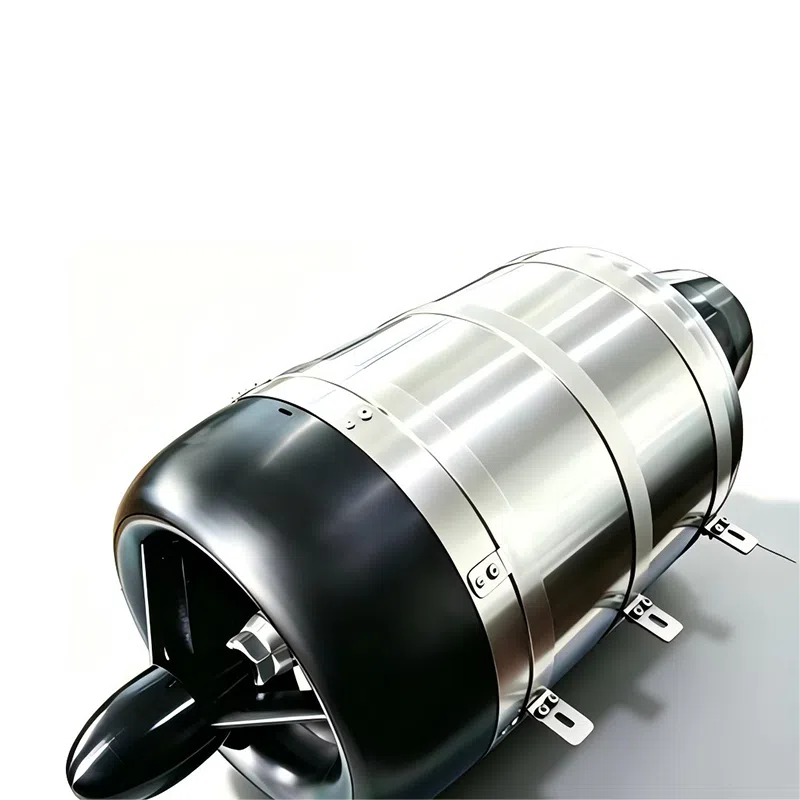
Introduction
Cold climate operation has long been one of the biggest technical bottlenecks for commercial UAV engines. In high-altitude plateaus, northern low-temperature zones and seasonal cold weather environments, ordinary drone engines often face failed ignition, unstable idle speed, poor fuel atomization and rapid performance decay. These issues greatly limit the working efficiency of industrial drones in mapping, environmental monitoring, mountain patrol and cold-region agricultural inspection projects.
Shandong Zhongtian Power Technology Co., Ltd., a professional commercial UAV engine factory, has completed a new round of professional low-temperature environment reliability tests for its mass-produced drone engine series. Through ultra-low temperature chamber simulation and field cold-region flight verification, the company has optimized the ignition system, fuel supply structure and component cold resistance design, greatly improving the environmental adaptability of civilian UAV engines in cold working scenarios.
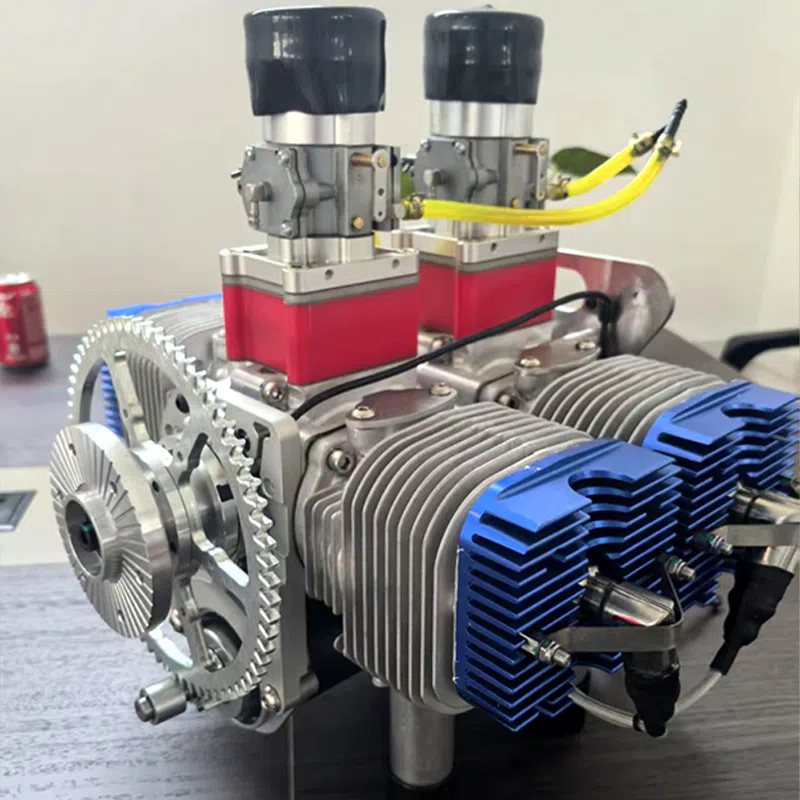
Industry Pain Points of Drone Engines in Low-Temperature Scenarios
Most standard commercial drone engines are calibrated for normal temperature environments. When the ambient temperature drops sharply, engine oil viscosity increases, fuel fluidity decreases, and internal mechanical resistance rises significantly. Conventional power units often require multiple restart attempts, cannot maintain stable idle operation, or suffer from insufficient power output during climbing and payload flight. For global commercial UAV users who need year-round continuous operation, unstable cold-start performance leads to delayed construction plans and increased equipment failure rates.
Aiming at these universal industry problems, Zhongtian Power’s technical team focused on low-temperature mechanical matching and cold-start dynamic response, abandoning conventional room-temperature calibration standards. The team carried out targeted structural optimization and full-cycle cold resistance testing to ensure that each batch of UAV engines can achieve fast ignition and stable operation in low-temperature environments.
Professional Low-Temperature Simulation Test Process & Authentic Data
The company’s environmental test laboratory simulated multiple gradient low-temperature environments to conduct systematic verification on finished drone engines, covering conventional cold weather and ultra-cold extreme working conditions. All test links strictly follow civilian industrial UAV power system inspection standards to ensure data authenticity and repeatability.
In the low-temperature start-up test, the placed drone engines were fully cooled to simulate long-term outdoor placement in cold regions. After temperature stabilization, the team conducted multiple ignition tests. The optimized ignition module and improved fuel atomization structure realized fast and successful one-time start-up, effectively solving the common problem of difficult cold ignition of traditional drone engines. Test data records show that the engine maintains stable ignition success rate even in continuous low-temperature cycle tests.
In low-temperature continuous operation tests, the technicians monitored real-time changes in engine speed, idle stability, exhaust temperature and operating vibration. Traditional engines are prone to jitter and speed fluctuation in low-temperature environments, which affects the stability of UAV aerial photography and precision surveying missions. The optimized commercial UAV engine maintains uniform power output and smooth throttle response during long-duration low-temperature operation, with no obvious performance attenuation or abnormal vibration.
In addition, the team completed cold-state component durability inspection. After long-hour low-temperature operation, key moving parts and sealing structures remain in stable condition, proving that the upgraded material formula and assembly process can effectively resist low-temperature aging and cold-state wear, extending the overall service life of the drone engine in cold climate regions.
Field Flight Verification in High-Altitude Cold Regions
On the basis of laboratory simulation tests, Zhongtian Power also organized actual field flight tests in high-altitude cold areas to further verify the practical performance of the optimized drone engines. The test environment featured low air pressure and low temperature, which perfectly reproduces the harsh working conditions of commercial UAVs in plateau mountainous areas.
During field verification, the UAV equipped with the new engine completed multiple takeoff, cruise, fixed-point hovering and climbing missions. The power system responded sensitively and maintained continuous and stable output, fully adapting to the low-temperature and low-pressure plateau environment. The field test results are highly consistent with laboratory data, proving the reliable cold resistance and scenario adaptability of the mass-produced engine products.
Commercial Value of Cold-Resistant UAV Engine Upgrade
The low-temperature performance upgrade breaks the seasonal and regional usage limitations of traditional commercial drone engines. For global UAV manufacturers and fleet operators, it greatly expands the applicable scenarios of industrial drones, supports all-weather operation in high-altitude cold regions and winter low-temperature environments, and improves the annual utilization rate of UAV equipment.
At the same time, stable cold-start performance reduces equipment failure losses and on-site maintenance costs, helping commercial users achieve more efficient and low-cost industrial operations. All low-temperature test data and flight verification reports can be provided to customers as product certification materials, supporting project bidding and product promotion in global cold-region markets.
FAQ
Q1: Can your commercial drone engine work stably in winter low-temperature environments?
A: Yes. Our UAV engines have passed professional low-temperature simulation tests and high-altitude cold-region flight verification. Optimized for cold start and low-temperature operation stability, they support normal commercial drone missions in cold winter and high-altitude low-temperature scenarios.
Q2: Will low-temperature operation shorten the service life of your UAV engine?
A: Our engines adopt low-temperature resistant materials and optimized cold-state structural matching. After accelerated low-temperature fatigue testing, the components maintain stable wear resistance. Reasonable operation according to the manual will not cause abnormal service life loss in cold climates.
Conclusion
As the global commercial UAV industry continues to expand to high-altitude and cold-region markets, low-temperature environmental adaptability has become an important indicator for measuring high-quality UAV engines. Shandong Zhongtian Power Technology Co., Ltd. continues to rely on professional environmental testing systems and field flight verification to iterate product performance, focusing on solving practical environmental adaptation problems for civilian industrial UAV power systems.
All factory drone engines support customized low-temperature performance calibration and complete test report delivery. The company sincerely welcomes global UAV integrators, distributors and industrial operation clients to inquire about cold-resistant engine solutions and reach long-term stable cooperative partnerships.


